Faculty Publications
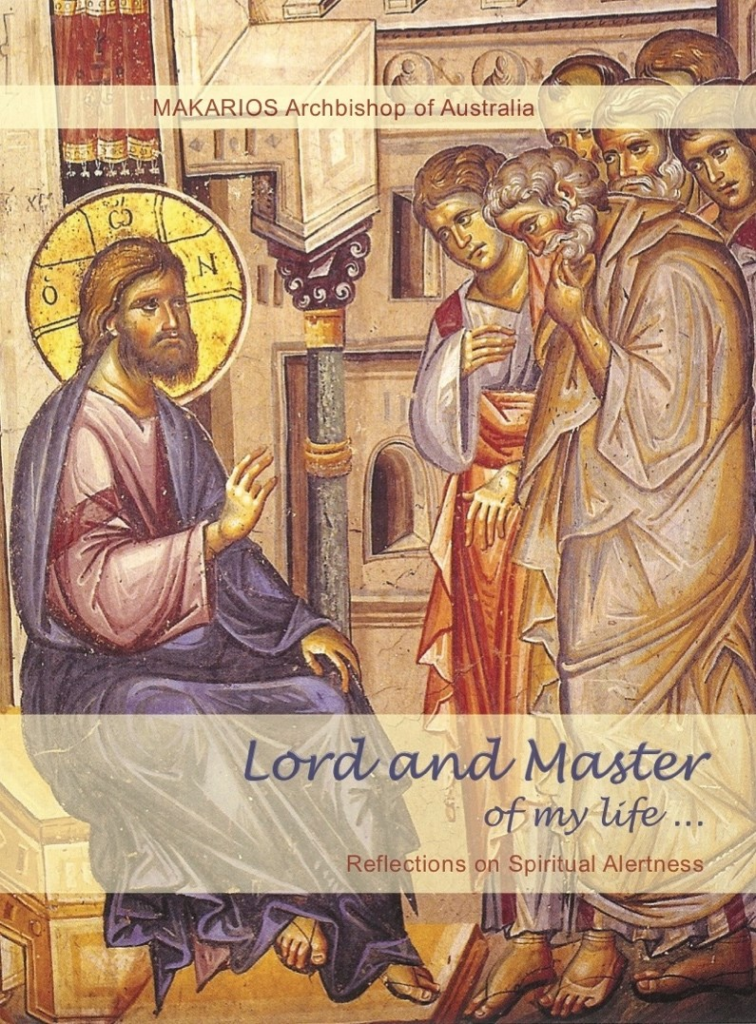
Griniezakis, (Archbishop) Makarios. Lord and Master of my Life. Translated by Anna Demetriou & Angeliki Georgiou St Andrew’s Orthodox Press, Sydney, 2020.
His Eminence Archbishop Makarios of Australia in his illuminating and spiritually edifying book prudently offers “Reflections on Spiritual Alertness.” Just as monks are summoned to prayer by the sound of the talanton, His Eminence Archbishop Makarios prayerfully calls upon the faithful to repentance through his explanation of this truly Orthodox prayer, “the Prayer of Great Lent.” – From the ‘Foreword’ by His Grace Bishop Silouan of Sinope.
His Eminence Archbishop Makarios (Griniezakis) of Australia was elected as the sixth primate of the Greek Orthodox Archdiocese of Australia, an eparchy of the Ecumenical Throne, on May 9, 2019, by the Holy Synod of the Ecumenical Patriarchate. On June 29, 2019, he was enthroned as Archbishop of Australia at the Greek Orthodox cathedral of the Annunciation, Sydney. Among his many Archiepiscopal responsibilities, he is also Dean of St Andrew’s Greek Orthodox Theological College..
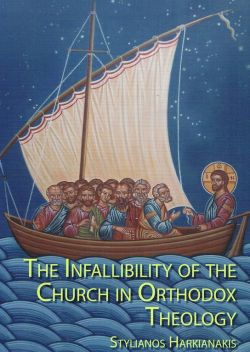
Harkianakis, (Archbishop) Stylianos. The Infallibility of the Church in Orthodox Theology. Translated by Philip Kariatlis. Adelaide & Sydney: ATF Press & St Andrew’s Orthodox Press, 2008.
Description: Although several Orthodox theologians have significantly influenced the development of Ecclesiology in the twentieth century, the contribution of (Archbishop) Stylianos Harkianakis remains, without doubt, a landmark in the history of that theological field today. Essentially, the author’s consideration of the Church is that it is the most intimate and graced communion not only of human persons but of the entire created cosmos bonded together in a wondrous relationship with the uncreated God. Unconfused and indivisibly united with God, the Church therefore enjoys and rightly proclaims the truth – ie is infallible – for the world’s salvation and the glorification of God. Ultimately, Harkianakis’ theology of the Church’s infallibility, ie its truthfulness, is simply a doxological affirmation of the genuine presence of God among His people and the world at large.
About the Author: Stylianos Harkianakis, Archbishop and Primate of the Greek Orthodox Church in Australia, is founding Dean and Professor of Systematic Theology at Saint Andrew’s Greek Orthodox Theological College, Sydney. He has also been a major Orthodox contributor to modern ecumenical discussions, especially in his capacity as Co-Chair of the Joint Commission for Theological Dialogue between the Roman Catholic and the Orthodox Churches (1980-2003). The author is also a recognised poet with over 37 collections published. Among other distinctions, he has gained the Gottfried von Herder award for his outstanding contribution to European theological and cultural achievements.
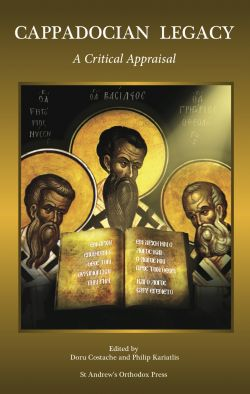
Costache, Doru, Kariatlis, Philip & Baghos, Mario (eds.), Alexandrian Legacy: A Critical Appraisal. Newcastle upon Tyne: Cambridge Scholars Publishing, 2015.
Description: This volume brings together contributions exploring a range of aspects of the Alexandrian patristic tradition from the second half of the second century to the first half of the fifth century, a tradition whose complex and significant legacy is at times misunderstood and, in some quarters, wholly neglected. Authored by both Australian and international scholars, the fourteen chapters here highlight that, behind the complexity of this tradition, one finds a vibrant Christian spirit—granted, one that has successfully put on the flesh of Hellenistic culture—and a consistent striving towards the reformation and transformation of the human being according to the gospel. Furthermore, this volume contributes a nuanced voice to the scholarly choir which already hums a new song about Christian Alexandria and its representatives. Indeed, these contributions are interdisciplinary in approach, combining methods pertaining to the fields of historiography, theology and philosophy, pastoral care, hermeneutics, hagiography, and spirituality. By way of this complex approach, this book brings together areas which currently evolve in separate scholarly universes, which is wholly befitting to the complexities entailed by the ever-challenging Alexandrian legacy.
About the Editors: Doru Costache is an Orthodox clergyman. He studied in the University of Bucharest, where he also tutored and lectured for nine years, and currently works as Senior Lecturer in Patristics at St Andrew’s Greek Orthodox Theological College, Sydney. He has co-convened the St Andrew’s Patristic Symposia since 2009, being a member of the International Association of Patristic Studies and the Australian Association for Byzantine Studies. He has published a number of books and articles in both Romanian and English in the areas of theology, patristics and science and religion, including Cappadocian Legacy: A Critical Appraisal (2013) and “Mapping Reality within the Experience of Holiness” (2015).
Philip Kariatlis is Academic Director and Senior Lecturer in Theology at St Andrew’s Greek Orthodox Theological College, where he teaches Church Doctrine. He is a member of the Faith and Unity Commission of the National Council of Churches in Australia and a Director of the Sydney College of Divinity. He translated the doctoral dissertation of Archbishop Stylianos (Harkianakis), The Infallibility of the Church in Orthodox Theology (2008), and is the author of Church as Communion: Gift and Goal of Koinonia (2011) and co-editor of Cappadocian Legacy: A Critical Appraisal (2013).
Mario Baghos is Associate Lecturer in Church History at St Andrew’s Greek Orthodox Theological College, and is a member of the Australian Association for Byzantine Studies. He recently received his PhD in Studies in Religion from the University of Sydney, and his research interests include the history of religions, patristic eschatology, and ancient and modern representations of Christian saints. He has published numerous articles on the latter two topics, including “Ecclesial Memory and Secular History in the Conflicting Representations of Cyril of Alexandria: An Apology for the Saint” (2014). He also serves as editorial assistant for Phronema.
Harkianakis, (Archbishop) Stylianos. The Infallibility of the Church in Orthodox Theology. Translated by Philip Kariatlis. Adelaide & Sydney: ATF Press & St Andrew’s Orthodox Press, 2008.
Description: Although several Orthodox theologians have significantly influenced the development of Ecclesiology in the twentieth century, the contribution of (Archbishop) Stylianos Harkianakis remains, without doubt, a landmark in the history of that theological field today. Essentially, the author’s consideration of the Church is that it is the most intimate and graced communion not only of human persons but of the entire created cosmos bonded together in a wondrous relationship with the uncreated God. Unconfused and indivisibly united with God, the Church therefore enjoys and rightly proclaims the truth – ie is infallible – for the world’s salvation and the glorification of God. Ultimately, Harkianakis’ theology of the Church’s infallibility, ie its truthfulness, is simply a doxological affirmation of the genuine presence of God among His people and the world at large.
About the Author: Stylianos Harkianakis, Archbishop and Primate of the Greek Orthodox Church in Australia, is founding Dean and Professor of Systematic Theology at Saint Andrew’s Greek Orthodox Theological College, Sydney. He has also been a major Orthodox contributor to modern ecumenical discussions, especially in his capacity as Co-Chair of the Joint Commission for Theological Dialogue between the Roman Catholic and the Orthodox Churches (1980-2003). The author is also a recognised poet with over 37 collections published. Among other distinctions, he has gained the Gottfried von Herder award for his outstanding contribution to European theological and cultural achievements.
It is also available from the website of St Andrew’s Press.
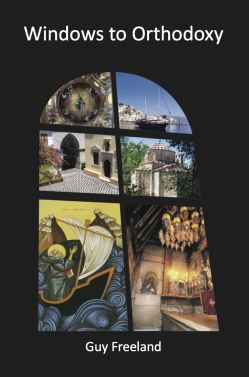
Freeland, Guy. Windows to Orthodoxy. Sydney: St Andrew’s Orthodox Press, 2013.
Description: Why do Orthodox Christians speak about ‘heaven on earth’? How does the Orthodox Church interpret the Bible? What is a Byzantine floor mosaic doing in Canberra? And why would a church contain a labyrinth? Windows to Orthodoxy offers answers to these and other fascinating questions, but in a most distinctive way. Rarely are spiritual topics approached in a matter that is edifying yet, at the same time, easy to follow and entertaining. The breadth of topics covered in this impressive collection of essays is astounding. The content not only reflects the author’s devotion to Orthodoxy as a Faculty member of St Andrew’s Greek Orthodox Theological College in Sydney, but also his academic background as a university lecturer in the History and Philosophy of Science. He bridges both worlds superbly well.
About the Author: Guy Freeland was born and educated in England, obtaining his PhD from the University of Bristol. Having arrived in Australia with his wife in 1964, he taught at the University of New South Wales for over thirty-four years. He has been an Honourary Lecturer at St Andrew’s Greek Orthodox Theological College since its foundation in 1986, teaching and writing particularly in the areas of biblical hermeneutics and liturgical studies.
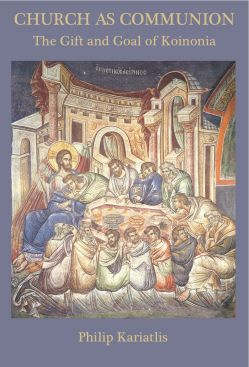
Kariatlis, Philip. The Church as Koinonia: Gift and Goal of Communion (Adelaide & Sydney: ATF Press and St Andrew’s Press, 2011)
Description: This book innovatively explores the notion of koinonia for understanding the nature and function of the Church. Since the Scriptures assert that the Church is the Church of God, God’s communal mode of existence is looked at namely, God who is a communion of three hypostases relating to one another in an interpenetrating koinonia of infinite love as a way of understanding the very being of the church as communion. Such a notion of koinonia, far from having anything to do with socio-political understandings, suggests that it is a foundational gift bestowed from above to the world as the solution par excellence to the impasse of isolationism. More often than not, however, such an ecclesiology of communion has not taken seriously the historical reality of the Church living within the fallen world along with its ceaseless temptations, divisions and even sins in history. In this way, it becomes apparent that a dialectic needs to be acknowledged in the notion of communion as both foundational gift from God, and yet one still to be fully realised. Accordingly, this work shows that the Church is not only as the gift of God’s miraculous presence here on earth. The Church is also constantly striving to exist epicletically until such time as it will fully experience the final consummation in God’s eschatological kingdom. An examination of this double dimensionality of the Church is undertaken in order to assess if this is in line with the Scriptural witness of the ekklesia. Having established the gift-goal dialectic in the notion of koinonia in the New Testament Church, the study then traces the trajectory of this dynamic approach to koinonia in the Churchs worship and authoritative structures. This promises to cast both a deeper light on, and a more realistic solution to ecclesiological problems within the life of the Church today, allowing for the Churchs constant renewal.
About the Author: Philip Kariatlis is Senior Lecturer of theology at St Andrew’s Greek Orthodox Theological College, Sydney, Australia. In 2010 he received his doctorate in Ecclesiology from the Sydney College of Divinity (SCD). His research interests lie in Church doctrine, specifically its existential and salvific significance. He translated the doctoral dissertaton of Archbishop Stylianos (Harkianakis) entitled The Infallibility of the Church in Orthodox Theology (2008). He is a member of the Faith and Unity Commision of the National Council of Churches in Australia.